Best Practices: The Means and the End to Building Stronger Communities
by Irène Arrata
During the MCAA Annual Conference 2025, the Communication Working Group organised a blogging contest, inviting onsite and online participants to share key takeaways, insights, and reflections through engaging blog posts. This contest encouraged participants to engage deeply with various sessions and topics, providing a platform for sharing diverse perspectives and highlighting key moments from the event. After receiving several submissions, the top entries, showcasing exceptional quality and reporting, were published and honoured with awards. The blog post below earned third place in the blogging contest.
--
Do you remember your first day on the job? Your first scientific report, your first grant proposal, your first audit? The first student you supervised or the first class you taught? If you were lucky, you had someone to guide you, but a mentor is not always available when you need one. Surely, lots of mistakes were made, and you learnt from them and found better ways to work. Over time, you became more efficient, more creative. Your experiences shaped you, and you gained skills. Yet sometimes, despite your best efforts, you could not find the right path and fell short of your goal.
At the MCAA Annual Conference 2025, one message stood out loud and clear: sharing knowledge and best practices is crucial. If I have already developed, tested, and refined a strategy that led to success, there is no reason for you to start from scratch. My experience can help you foresee obstacles and plan the best way to overcome them. In return, your insights can help me improve my approach. It’s a win-win.
The MCAA community is a goldmine of knowledge and experience, and it would be a missed opportunity not to tap into it. The importance of sharing best practices echoed across many plenary and parallel sessions: from supervision to data management, or implementing sustainability policies.
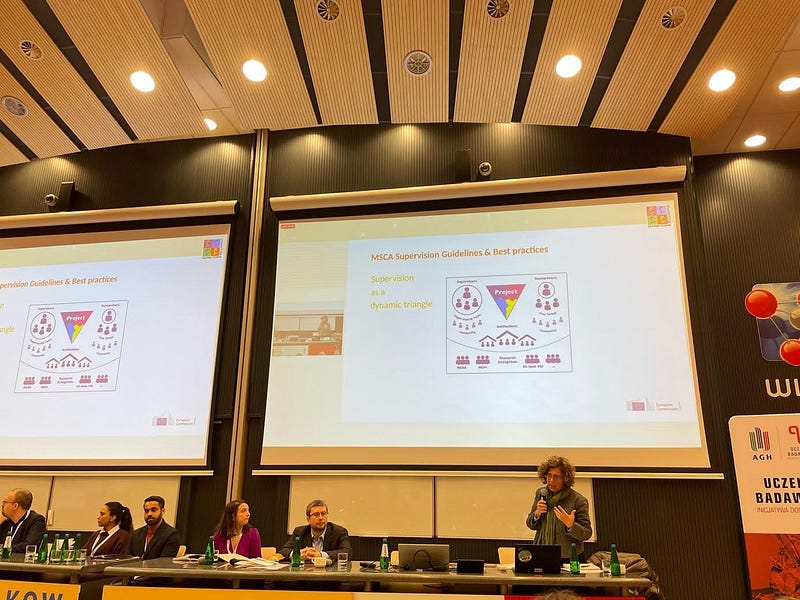
In a rapidly evolving world marked by political uncertainties, restricted budgets, limited time, and increasing constraints, efficacy is more important than ever to remain competitive. The best way to achieve it might simply be to pool our collective experiences and explore insights from a variety of perspectives. With its 22,000 members, the MCAA provides the perfect forum for that.
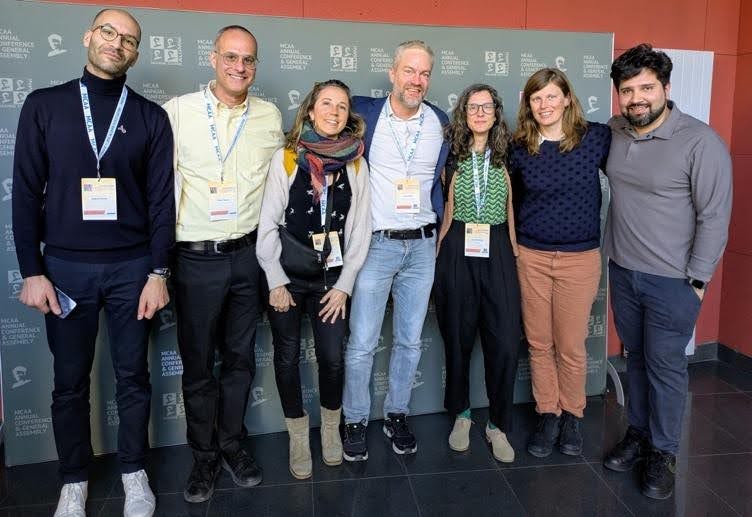
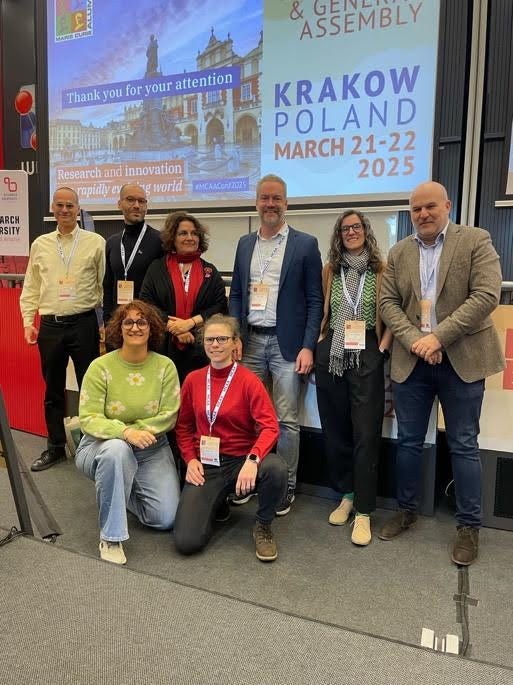
The Research Management Working Group is a prime example of how sharing best practices can bring people closer. From organising kick-off meetings, preparing periodic reports, handling visa issues, or managing conflicts, the group thrives on exchanging knowledge. The success of our approach translates into the strong community that we have built, so much so that the way we operate could itself serve as a best practice for building engaged, resilient working groups.
From Daily Challenges to Policy Change
Beyond our individual work, best practices play a crucial role in shaping policy. The discussions held during the conference demonstrated how active MCAA members care about their work, their community, and the future of research; although they are very aware of the system’s flaws. The drive to improve research culture was palpable during the event, leading to an important realisation: policy change is key. But changing the world takes time, effort, and most importantly, convincing stakeholders who often resist disruptions to their routine.
How can I convince decision-makers when all I have is an idea, a tedious or uncertain plan, and no guarantee whatsoever? Here, leveraging external success stories can be a powerful catalyst, not only proving that change is possible but also to demonstrate the potential impact at our own institutions. A collective, evidence-based approach is far stronger than any one individual’s vision.
Where to go from here?
There is no magic recipe for efficiently gathering and leveraging best practices, but there are key ingredients:
- A strong community: a growing network of motivated individuals willing to share their story — that’s the MCAA;
- The right platforms: places to exchange, whether they are events, meetings, websites, or online forums. The perfect solution might be a blend of these formats;
- Active listening: sharing best practices is not simply about telling your story; it’s about understanding the other person’s need, and catering your answer to provide useful insights;
- Dynamic, evolving resources: best practices should grow with input from the community, but without becoming overwhelming or impractical.
Importantly, to make sure these best practices do not end up taking the dust, we need to engage the community, enrol new members, encourage junior profiles to quiz their more senior peers, but also make them realise that their own experience, even if less extensive, can be valuable to someone else.
Sharing best practices is not just about saving time, but about working smarter and strengthening our community. By exchanging insights and refining our approaches together, we turn individual experience into collective progress. The key now is to keep the conversation going and ensure that knowledge does not stay siloed, so we can put it to good use where it matters most.